


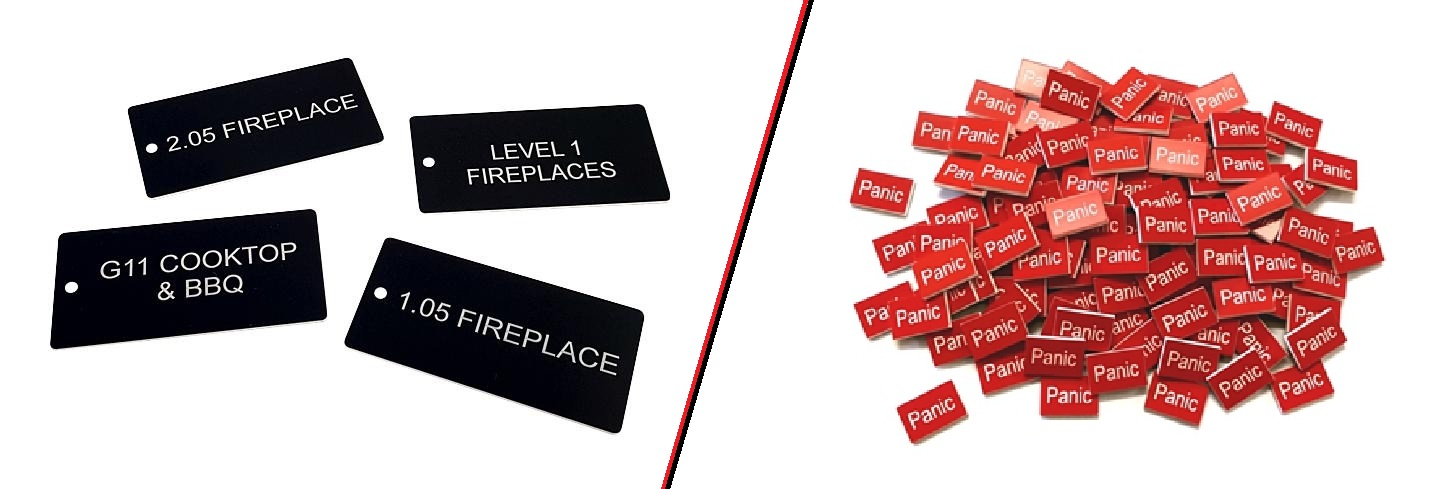
Traffolyte plastics and anodised aluminium are two fantastic materials selections for producing industrial-grade labels – but these materials definitely aren’t interchangeable.
Whilst traffolyte is generally cheaper and offers insulatory qualities making it ideal for electrical test and tagging, anodised aluminium is praised for its superior durability, UV resistance, and suitability for high-heat environments.
Deciding between traffolyte vs. anodised aluminium is vital for industrial manufacturing projects, where finished products are likely to have highly specialised use cases and applications.
To help demystify these two very industrial materials, our team at Vector & Raster Laser will outline all the key qualities and characteristics of traffolyte and anodised aluminium, unpacking some of the most common use cases for both materials. Read on to determine whether traffolyte or anodised aluminium is the right fit for your next industrial manufacturing project.
Traffolyte vs. anodised aluminium: key differences
Material properties
Traffolyte is generally a 2- or 3-ply phenolic plastic, whereas anodised aluminium is a hardened aluminium sheet with an oxide layer manufactured via chemical bathing processes. The anodisation makes anodised aluminium more robust, significantly reducing chances of corrosion.
Durability and elemental resistance
Whilst traffolyte is generally considered to be suitable for indoor and outdoor applications, anodised aluminium is better for high-traffic and extreme environments, including across exposed and semi-exposed outdoor applications. This is also why you’re more likely to see anodised aluminium being used in automotive and electrical parts as well as in manufacturing industrial signage
Colours, finishes, and customisability
Traffolyte plastic sheets are available in a wide variety of colour combinations, plus metallic and textured finish options as well. The sheer variety of customisation options makes traffolyte plastics a great materials selection for products like laser engraved name badges or engraved signs and labels. Traffolyte laser engraving is a highly satisfying process, thanks in part to the different coloured layers comprising traffolyte sheets.
Contrastingly, anodised aluminium produces a more understated finished design, generally characterised by a clean, metallic finish with a chosen surface colour marking to a crisp white colour. Anodised aluminium also happens to be available in a range of different colours, including black, blue, green, purple, red, and gold. Laser cut aluminium parts can also be anodised in a wide range of custom colours upon request.
Anodised aluminium sheets are also available in both gloss and matte finishes, however matte finishes are generally considered to be more popular in industrial contexts to support legibility from a distance.
Benefits of traffolyte and anodised aluminium for industrial manufacturing
Given their hard-wearing construction, both traffolyte and anodised aluminium are suitable for various industrial applications, spanning from label manufacturing to corrosion-resistance signage.
Here are just some of the key benefits of using either of these durable materials for industrial manufacturing purposes.
Chemical and corrosion resistance
Being a phenolic plastic (i.e. a heat-treated resin), traffolyte is renowned for its exceptional thermal stability, chemical resistance, and electrical insulation. This is why traffolyte is the plastic of choice for most test and tag applications, plus interior signage in environments that may house corrosive chemicals like acids.
Anodised aluminium also possesses superior chemical and corrosion resistance, thanks to its chemical treatments during the materials manufacturing process. This makes anodised aluminium suitable not only for indoor but also outdoor applications like for weather-resistant metal signage.
Temperature tolerance and stability
As both traffolyte and aluminium don’t melt, warp, or catch fire when exposed to high heat and possess high strength-to-weight ratios, they are not only easy to work with across even the most extreme industrial environments, but also deliver a level of durability that eliminate risks of components needing to be replaced or updated over time.
Long-term legibility
When it comes to producing laser etched tags and custom signage, anodised aluminium provides an easily legible two-toned finish that can be read from a distance, depending on the size of lettering. This makes anodised aluminium a suitable choice for safety signage that may need to adhere to compliance regulations surrounding both legibility and durability.
Traffolyte plastic can also boast high long-term legibility with the right high-contrast two-tone colour finish, making traffolyte engravings a great choice for electrical switchboards and nameplates where electrical insulation is advantageous.
Industrial applications for traffolyte and/or anodised aluminium products
Here are just some of the key industrial applications of both traffolyte and anodised aluminium:
- Indoor/outdoor signage – including directional signs, and safety signs marking fire stairs, fire safety equipment, etc.
- Test and tag labels – for managing electrical appliance servicing and maintenance
- Laser etched switches – used in factories and even in automotive engineering (commercial or industrial)
- Industrial machine labels – including operational labels for buttons, dials, and switchboards
- Other types of custom laser etched tags
Is traffolyte or anodised aluminium the best fit for your manufacturing project?
Ultimately, traffolyte plastics and anodised aluminium possess similar qualities, with both materials being highly durable, corrosion-resistant, and thus suitable for a wide variety of industrial applications.
But these materials aren’t necessarily interchangeable. In some cases, the improved electrical insulation and lower cost per unit of traffolyte plastic may make it the more ideal material for your business. In other cases, the superior corrosion resistance of anodised aluminium is likely to make this more specialised material the best choice for your manufacturing project.
If you’d like to learn more about our range of traffolyte and anodised aluminium laser engraving materials, then don’t hesitate to reach out to our expert laser team here at Vector & Raster Laser Services. Get in touch with us today to learn more about both of these two different materials, or even to get a free quote on your next commercial laser cutting or engraving project.
Traffolyte vs. anodised aluminium FAQs
Which material lasts longer in outdoor conditions?
Given its superior corrosion resistance, anodised aluminium is generally considered to be better suited to outdoor applications.
Can both materials be laser engraved effectively?
Yes, the hard-wearing composition of both traffolyte and anodised aluminium make them highly suitable for laser engraving processes.
What’s the cost difference between traffolyte and anodised aluminium?
As traffolyte is a phenolic plastic composed of multiple layers or plies, it’s cheaper to manufacture when compared to anodised aluminium. This makes traffolyte plastic sheets a more cost-effective alternative to anodised aluminium across some (not all) use cases.
Which material is better for safety signage?
Traffolyte plastic with a high-contrast finish for legibility may be suitable for interior or indoor safety signage. For outdoor signage, however, anodised aluminium may provide a more durable design with longer term legibility.
How do you choose between traffolyte and anodised aluminium for asset tags?
Traffolyte plastic can be used for asset tags in environments where high heat resistance and electrical insulation are required. For environments that house corrosive chemicals like manufacturing facilities or laboratories, anodised aluminium may be a more suitable option for asset tags.
Share On:


